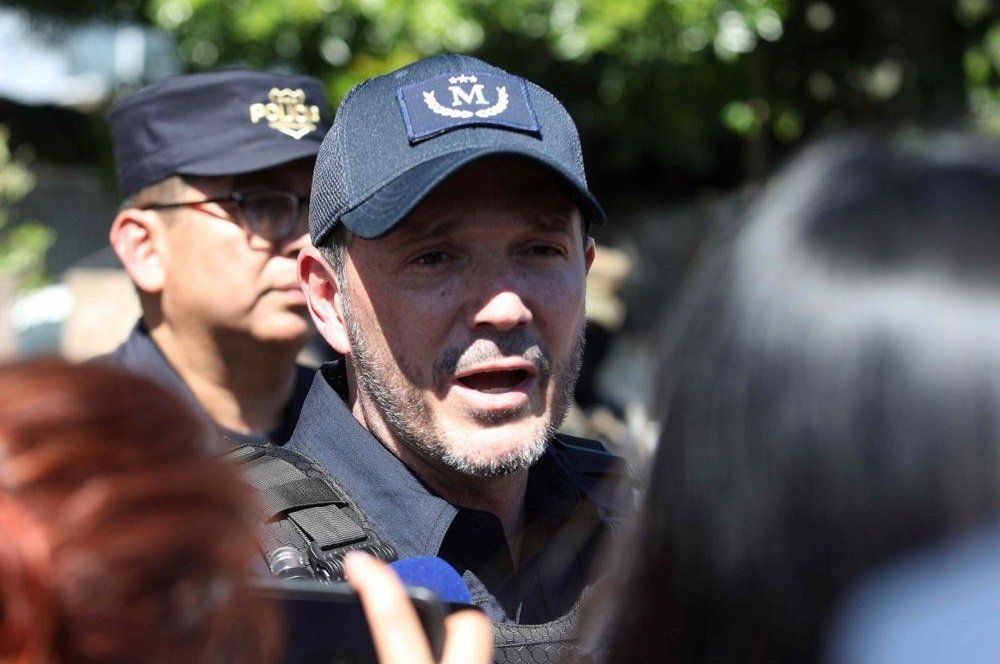
El Salvador Approves Life Sentences Amid Deepening Democracy Concerns
El Salvador has taken a significant step in its hardline security policy, with the legislative assembly swiftly approving reforms that allow for life sentences El Salvador. This move, championed by populist President Nayib Bukele, signals a further escalation in the nation's battle against gang violence but has simultaneously intensified fears about the erosion of democratic checks and balances and fundamental human rights within the Central American nation.
The reform, presented by Bukele's security cabinet and passed by an overwhelming 59 out of 60 lawmakers, is expected to be ratified imminently. It arrives amidst a series of constitutional changes pushed by Bukele, which critics argue are systematically chipping away at the country's delicate democratic institutions. The introduction of life sentences, a penalty previously not widely utilized in El Salvador's justice system for certain crimes, represents a potent symbol of the government's unwavering commitment to its "mano dura" (iron fist) approach to crime.
The Legislative Shift: Enacting Life Sentences in El Salvador
The approval of life sentences El Salvador highlights the firm grip President Bukele's New Ideas party holds over the legislative assembly. The near-unanimous vote underscores the concentrated political power that allows for rapid and impactful legal reforms. President Bukele himself has used strong rhetoric to frame the discussion, famously challenging critics by asking, “We will see who supports this reform and who dares to defend the idea that the Constitution should continue prohibiting murderers and rapists from remaining in prison.” This statement encapsulates the government's narrative, framing the reform as a necessary measure to protect citizens from violent criminals.
The legislative action extends beyond just increasing sentence severity. It's part of a broader strategy that has seen rounds of constitutional reforms, many of which have been sharply criticized for centralizing power and undermining institutions designed to provide oversight. For many observers, the swift passage of such a weighty legal change, with minimal opposition, serves as a stark indicator of the diminishing space for dissent and independent scrutiny within El Salvador's political landscape. The focus is squarely on eliminating crime, often at the perceived expense of traditional legal safeguards and due process.
A Broadening Crackdown: From State of Emergency to Life Sentences
The new legislation allowing for life sentences El Salvador is not an isolated policy but rather builds upon a foundation laid by the state of emergency, which began in March 2022 following a brutal wave of gang violence. This state of exception dramatically altered the legal landscape, allowing for arrests without warrants, restricting assembly rights, and granting authorities broad powers to detain individuals under vague accusations. While these measures have been credited by the government with significantly reducing homicide rates and dismantling gang structures, they have also sparked widespread condemnation from human rights organizations.
Under the state of emergency, more than 90,000 people have been detained. While official sources report that around 8,000 innocent individuals have been released, human rights groups, such as the Inter-American Commission on Human Rights (IACHR), have documented countless cases of arbitrary detentions. Allegations include prisoners being held with little evidence, facing mass trials, and often losing contact with their lawyers, leading to significant challenges in ensuring due process. Tragically, rights group Socorro Juridico Humanitario reports that 454 Salvadorans have died in prisons since the crackdown began. This context of extensive detentions and procedural shortcuts provides a sobering backdrop against which the introduction of life sentences must be viewed. For a deeper understanding of these crucial aspects, explore El Salvador's State of Emergency: Rights and Arbitrary Detentions.
Precedent and Escalation: Hundreds-Year Sentences and International Commentary
Long before the approval of formal life sentences, El Salvador’s judicial system had already demonstrated its capacity for imposing exceptionally severe penalties. The attorney general’s office has announced hundreds-year-long prison sentences for convicted gang members, particularly those from notorious groups like MS-13 and Barrio 18. Some of these "exemplary sentences" have reached staggering figures, with one individual receiving 1,335 years in prison, and ten others facing terms ranging from 463 to 958 years, for crimes including homicides and disappearances. These extreme sentences serve not only as punishment but also as a powerful deterrent message, showcasing the government's resolve to permanently remove gang members from society. You can read more about these unprecedented judicial actions in El Salvador Sentences Gangs to Hundreds of Years in Prison.
The evolving situation in El Salvador has also drawn international attention, with former U.S. President Donald Trump notably weighing in. Trump, in a context of discussions about punishing individuals targeting high-profile figures and companies, suggested 20-year jail sentences for certain 'sick terrorist thugs.' He then provocatively proposed that these individuals serve their time in El Salvador, citing the country's prisons as having "lovely conditions." This statement, while perhaps rhetorical, reflects a perception of El Salvador's penal system as uniquely punitive and effective, aligning with the "tough on crime" image Bukele's government cultivates. Project 2025, which reportedly includes provisions for deporting such individuals to El Salvador to serve with violent cartel gangs, further highlights this external recognition, albeit controversial, of El Salvador's aggressive approach to incarceration.
Democracy Under Strain: Checks, Balances, and Human Rights
The current legal and political developments in El Salvador prompt serious questions about the health of its democracy. The rapid legislative approvals, including that of life sentences El Salvador, with minimal debate and virtually no opposition, underscore a significant imbalance of power. Critics argue that Bukele's party's control over the legislature and judiciary has effectively dismantled the traditional system of checks and balances crucial for a functioning democracy. This consolidation of power allows the executive branch to push through its agenda with unprecedented speed and without substantial challenge.
While the government justifies its actions by pointing to the devastating impact of gang violence—alleging MS-13 and Barrio 18 are responsible for approximately 200,000 deaths over three decades—human rights organizations emphasize the potential long-term consequences of sacrificing civil liberties for security. The arbitrary detentions, lack of due process, and deaths in custody documented by these groups highlight a significant human cost. The challenge for El Salvador, and for democratic nations worldwide, is to find a balance where national security is achieved without fundamentally undermining the rule of law, protecting the innocent, and upholding the basic human rights of all its citizens. This ongoing tension between public demand for safety and the preservation of democratic principles remains a central point of contention and concern for the international community.
Conclusion
The approval of life sentences El Salvador marks a pivotal moment in President Bukele’s relentless campaign against crime. While popular among many Salvadorans who have endured decades of gang violence, this legislative reform, coupled with the ongoing state of emergency and a history of exceptionally long sentences, raises profound concerns about the future of democracy, human rights, and the rule of law in the nation. The government’s swift, largely unchallenged passage of such impactful laws signals a worrying trend towards centralized power and a justice system prioritizing punitive measures above all else. As El Salvador continues its unique path to security, the international community and human rights observers will remain vigilant, monitoring the delicate balance between the eradication of crime and the preservation of fundamental freedoms.