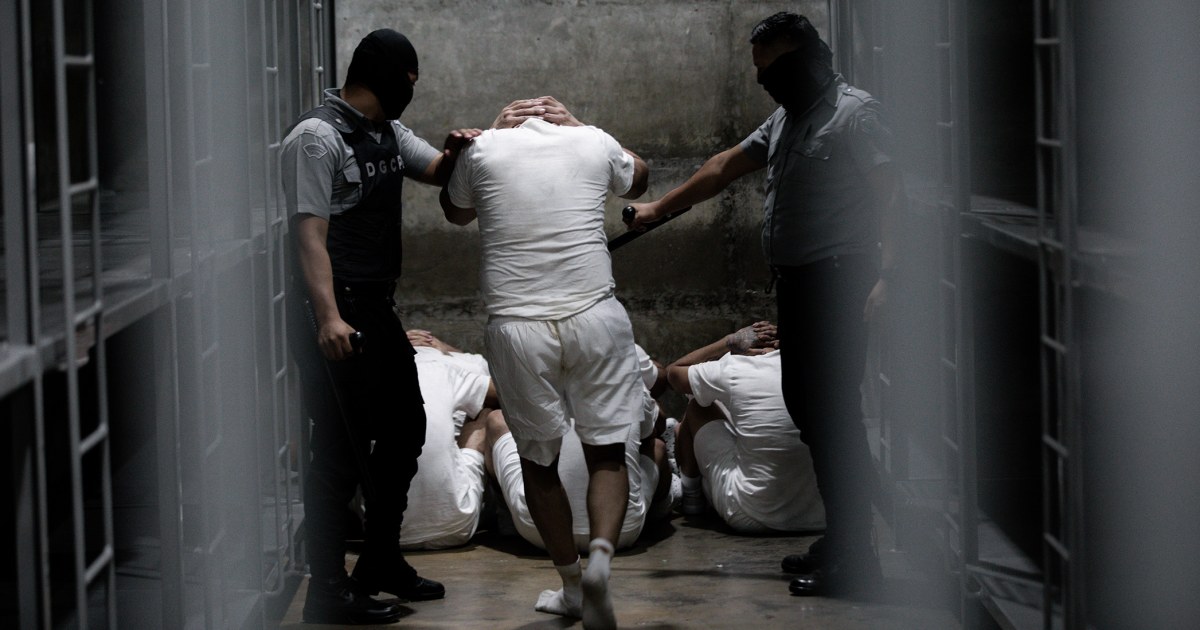
El Salvador has captured global attention with its unprecedented and often controversial approach to combating rampant gang violence. The nation, under the leadership of President Nayib Bukele, has implemented a severe crackdown that has culminated in the sentencing of hundreds of gang members to extraordinarily lengthy prison terms, some stretching into many centuries. These measures, while hailed by many as a necessary step to reclaim public safety, have simultaneously sparked intense debate regarding human rights, due process, and the very fabric of democratic governance. The recent reforms even include provisions that allow for what are effectively life sentences in El Salvador for the most egregious crimes, marking a dramatic shift in the country's penal system.
El Salvador's Unyielding Stance Against Gangs and Unprecedented Sentences
For decades, El Salvador was plagued by the brutal reign of powerful street gangs like Mara Salvatrucha (MS-13) and Barrio 18. These criminal organizations were responsible for widespread violence, extortion, and an estimated 200,000 deaths over three decades, effectively holding the nation hostage. In response to a surge in gang violence in March 2022, President Bukele declared a state of emergency, initiating a sweeping and relentless campaign against these groups. This crackdown has seen an astonishing number of arrests and, more recently, the imposition of prison sentences that defy conventional legal norms.
The attorney general's office proudly announced "exemplary sentences" for 248 members of MS-13, found guilty of a litany of crimes including 43 homicides and 42 disappearances. The terms handed down are staggering: one individual received an astounding 1,335 years in prison, while ten others were sentenced to terms ranging from 463 to 958 years. These figures far exceed any traditional understanding of life sentences in El Salvador or anywhere else, serving as a powerful, albeit highly contentious, symbol of the government's iron-fisted resolve. The goal is clear: to ensure that those who have terrorized the nation will never again walk free, irrespective of how many human lifespans their sentences encompass.
Legislative Reforms, Due Process Concerns, and the State of Emergency
The severity of these sentences is underscored by recent legislative reforms championed by President Bukele. His security cabinet presented a measure to El Salvador's legislature, which is largely controlled by his populist party, seeking to allow for what are, in practice, life sentences in El Salvador for murderers and rapists. The reform was swiftly approved by an overwhelming 59 out of 60 lawmakers, signaling a unified front in the government's approach to crime. Bukele himself took to X (formerly Twitter) to challenge critics, asking, "We will see who supports this reform and who dares to defend the idea that the Constitution should continue prohibiting murderers and rapists from remaining in prison."
However, this legislative momentum has not been without significant controversy. Human rights organizations and international observers have sharply criticized Bukele's broader constitutional reforms, arguing they erode checks and balances and undermine the country's fragile democracy. The state of emergency itself has been a focal point of these concerns. Under this exceptional legal framework, authorities are empowered to make arrests without warrants, and thousands have been detained based on vague accusations, often with little to no evidence. Prisoners frequently face mass trials, have severely limited access to due process, and lawyers often struggle to even locate their clients within the sprawling prison system.
Human rights groups have extensively documented cases of arbitrary detentions. One such group even alleged before the Inter-American Commission on Human Rights (IACHR) that the vast majority of those imprisoned under the state of emergency were arbitrarily detained. While President Bukele vehemently disputes such allegations, he has acknowledged that approximately 8,000 innocent people have been released. This figure, while showing some corrective action, simultaneously highlights the immense scale of potentially wrongful detentions. The human cost has also been stark: rights group Socorro Juridico Humanitario reports that 454 Salvadorans have died in prisons since the crackdown began. For a deeper dive into these rights concerns, you can read our article on El Salvador's State of Emergency: Rights and Arbitrary Detentions.
International Perspectives and the Debate on Justice
El Salvador's aggressive anti-gang strategy has not only generated internal debate but has also drawn significant international attention. The drastic reduction in homicide rates since the crackdown began – a fact frequently cited by Bukele's supporters – has been presented as a compelling justification for the government's methods. Yet, the accompanying human rights concerns continue to draw condemnation from various global bodies and advocacy groups.
Interestingly, the conversation has even touched the highest levels of international politics. Former U.S. President Donald Trump, for instance, has expressed a unique appreciation for El Salvador's tough stance. In a statement, Trump suggested that "sick terrorist thugs" involved in actions against high-profile figures and companies should receive 20-year jail sentences and proposed they serve their time in El Salvador, citing the country's prisons as having "lovely conditions." His comments even referenced Project 2025, reportedly including provisions for deporting such individuals to El Salvador to serve alongside violent cartel gangs. While certainly an extreme view, it underscores a segment of international opinion that sees El Salvador's model as a potent, albeit harsh, solution to severe crime, even to the extent of proposing it as a destination for foreign convicts.
The international community grapples with the ethical implications of supporting a government that achieves security at a potentially high cost to civil liberties. This complex dynamic forces a re-evaluation of what constitutes justice, particularly in nations battling entrenched criminal enterprises that have historically undermined state authority.
Navigating the Complexities: Analysis and Future Outlook
El Salvador's pivot to extreme sentencing and a pervasive state of emergency presents a profound case study in the global dilemma between public safety and individual liberties. On one hand, the government argues that extraordinary measures are necessary to dismantle criminal organizations that have, for too long, held the population hostage, denying them basic security and the rule of law. The success in drastically reducing violent crime rates is a tangible outcome that resonates deeply with a populace weary of decades of fear. The psychological impact of imposing life sentences in El Salvador – or rather, terms that exceed any human lifespan – is intended to send an unequivocal message: crime does not pay, and its perpetrators will face consequences that endure beyond imagination.
On the other hand, the erosion of due process, the arbitrary detentions, and the reported deaths in custody raise serious questions about the long-term health of El Salvador's democracy and its commitment to human rights. While the immediate security gains are evident, the long-term sustainability of such a system is debatable. Will a generation grow up in fear of the state as much as of gangs? Can genuine reconciliation and social reintegration occur under such punitive conditions? These are crucial questions for the nation's future.
Practical Considerations:
- The Scale of the Problem: It's critical to remember the horrific scale of gang violence that necessitated this crackdown. MS-13 and Barrio 18 were not just criminal gangs; they were a parallel power structure that governed territories and exacted tribute, contributing to a massive loss of life over decades.
- Economic Impact: While human rights concerns persist, improved security has arguably opened doors for economic investment and tourism, areas where El Salvador previously struggled. This provides a strong incentive for the government to maintain its tough stance.
- Rehabilitation vs. Retribution: The current system heavily emphasizes retribution and incapacitation. The debate remains whether this approach, without robust rehabilitation programs, can truly solve the root causes of criminality or merely suppress its symptoms.
- Lessons for Other Nations: El Salvador's experiment offers lessons for other nations grappling with organized crime. It demonstrates the potential for rapid security gains through aggressive means, but also highlights the critical importance of balancing security with fundamental legal and human rights principles.
In conclusion, El Salvador's implementation of centuries-long sentences for gang members marks a pivotal and controversial chapter in its history. These unprecedented sentences, coupled with legislative reforms allowing for severe penalties, reflect a determined effort to eradicate a deep-seated problem that has terrorized the nation for generations. While the government points to a dramatic increase in public safety, critics underscore the alarming regression in human rights and due process. The global community watches closely, balancing admiration for newfound security against profound concerns for the principles of justice and democracy. El Salvador's journey will continue to serve as a powerful and complex testament to the extreme measures nations might take in their fight against pervasive crime, and the ongoing tension between order and liberty.